Aramean Citizens - Revitalizing Our Heritage


እምተንሥአ በኵሉ ዕለት፡ እሰግድ ወእጼሊ ለአምላክ አመስግን አምላክ በእንተ ሕይወት ዘወሀብከኒ

We are Chashah Bet Ezra’El. A people who stand still to wait on AMLAK.
A People. A Living Heritage.
A Community Built to Continue.
We carry a living Haymanot through prayer, sacred instruction, Sanbat, the Mashafa Qeddus, community, and service. We serve where there is need.
Today, that work begins in New Mexico through food, clean water, hygiene support, community service, learning, and practical assistance. At the same time, we are preparing for the restoration of living Gedam communities in Ethiopia, places where spiritual life, education, agriculture, housing, craftsmanship, work, and community responsibility can stand together again.


The work begins where we are.
The vision reaches where our
people are.
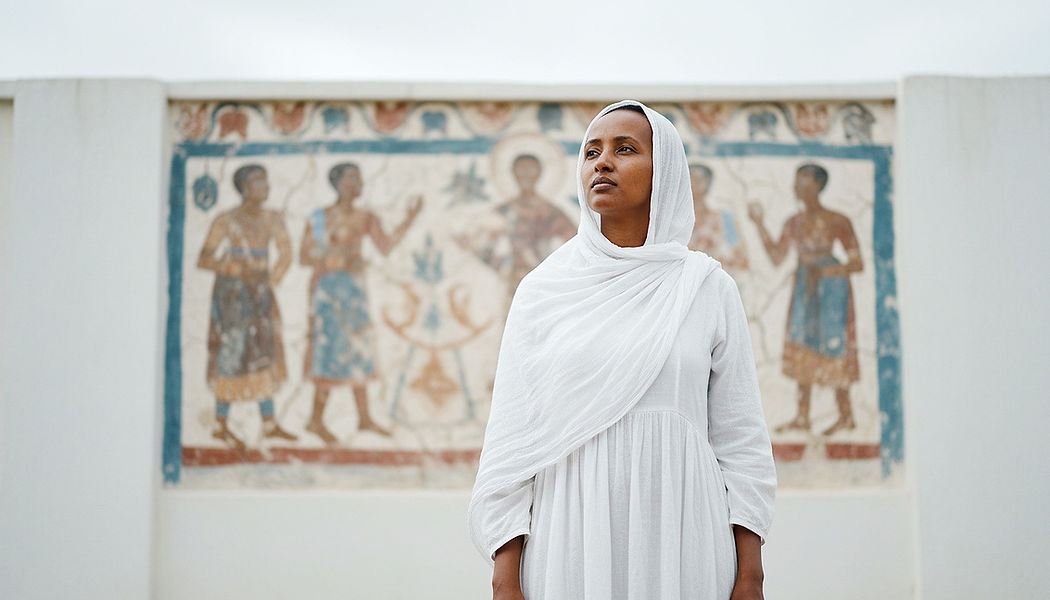
Chashah Are Interceding to AMLAK...
One Community.
Everyone has something to contribute.
.png)
What makes a living Gedam...
Six parts of one community.
Spiritual Life
Prayer spaces, monastic life, Sanbat,
Haymanot, and the daily practices that
sustain the spiritual community.
Learning
Schools, G'AZ language, heritage education,
youth development, apprenticeships,
and the transmission of knowledge.
Community
Housing, elder care, family support,
gatheringspaces, and practical systems
of mutual responsibility.
Economic Life
Agriculture, artisan workshops, manufacturing, entrepreneurship, enterprise, and opportunities
for people to contribute their skills.
Infrastructure
Clean water, sanitation, sustainable energy,
food production, and appropriate technology.
Heritage
Manuscripts, oral history, traditional craftsmanship, architecture, language, and cultural knowledge.

A strong community is built through participation.
CHASHAH is developing practical ways to recognize and connect those contributions to community needs.
Our SAHPHAR model explores how contribution can become a measurable part of community life.
A person may contribute an hour of work, a professional skill, food, transportation, agricultural knowledge, craftsmanship, teaching, technology, or simply the willingness to show up and help.
Those contributions can help connect people with appropriate community resources, workshops, learning opportunities, and other forms of participation. One hour of meaningful contribution → one recorded community credit.
The purpose is simple:


A quick example of how simple it works...
One hour of meaningful contribution
→ one recorded community credit.

Who Are the Chashah?
We Are a People, a Royal Populace.
Chashah Bet Ezra'El derive from the Highlands of Ethiopia, not a religion, who were compromised by war, our Kingdom dismantled into tribal identities after destruction of the Axum Empire, then further imposed with involuntary regional lines.
Our identity is carried through Bet Ezra’El, ancestral knowledge, G’AZ language, the Mashafa Qeddus, Haymanot, and the living institutions of Gedams, passed through kingdoms, migrations, monasteries, families, and generations.
A people deriving from Northern Ethiopia who worship AMLAK.
A people who quietly stand still for instructions from AMLAK.
A royal citizenship identified as Chashah Bet Ezra'El.
A powerful people of AMLAK.
One Foundation

Our heritage is not only something remembered. It is something practiced. It is found in how we pray, how we learn, how we care for elders, how we feed one another, how knowledge is carried between generations, and how community life is organized around responsibility.

እምተንሥአ በኵሉ ዕለት፡ እሰግድ ወእጼሊ ለአምላክ
What is G’AZ?
The language of the free
What is the Mashafa Qeddus?
The sacred instruction books through which knowledge and prayer are transmitted.
What is our Haymanot?
Faith is carried through prayer, Sanbat, Kahan, elders, and community responsibility.
What is a Gedam?
The community institution where spiritual, educational, agricultural, economic, andfamily life come together.
Return to AMLAK. Be freely who you were created to be.
Our work begins with what has been entrusted to us and grows
through what we build together.
COME HOME TO YOUR HAYMANOT
These are the Chashah SANBAT Rest Days
Sanbat is a sacred rest. A time to cease from ordinary work. A time to pray. A time to listen.
A time to remember AMLAK. A time to return to what matters.
EIGHTH
MOON
SANBAT Rest Days
October 12th starts the first day of the Eighth Moon for 2026.
The Eighth Moon cycle rest days are SUNDAY'S September 18th & 25th and November 1st & 9th.
SANBAT Eve
This begins at 3pm (D900) the day before SANBAT. Work must cease at 2pm to transition into SANBAT Eve.
Qeddase Prayers - The Chashah Kahan pronounces prayers of the Mashafa Qeddus seven (7) times per day spoken in G'az (Ge'ez). The initial time to pronounce is immediately after bowing to AMLAK at sunrise, or when arising to start the day.
The pronouncements are as followed:
-
Mesraqa at sunrise
-
Ne’u Nesged at 1050am
-
Maharanna at 1150pm
-
Qeddus at 630pm (D1230)
-
Mahari at 730pm (N130)
-
Yetbarak at 830pm (N230)
-
Basalameka at bedtime

Business Hours
-US Mountain Standard-
•Business Hours: 8am-4pm
Sanbat (Day of Worship)
•Once Per Week Closed
for Business
•Amended Monthly
•Calculated by Moon
Chashah
Monastery
Parliament

Mission
Introducing support services to Gedams of the North Highland regions through direct connection with Kahan/ Kahanot, Monks, Nuns, and Elders. Providing sustainable solutions for food security, social enterprises and capacity building for displaced community members.
Vision
Rendering international support and growth to Northern Highland Gedams so they remain progressive in building infrastructure, establishing schools to educate vulnerable youth and adults, providing organic wellness, and maintaining a culture of individuals with a personal innate mission to serve marginalized communities.
Purpose
Striving to become living vessels for AMLAK, the Light of our strength, and for him to amplify our sacred prayers for safety and community prosperity as we extend support of spiritual/ communal kinship across continents that preserves our ancient traditions of the Mashafa Qeddus for each generation.
Values
Heritage lived, not archived. Dignity in every delivery. Sanctuary, not compounds or absorption centers. Contribution recognized, not charity administered. What we learn, we document and share, so the work can continue beyond us.
Why a living Gedam is needed...
~81% of surveyed people aged 15–35 were reported as unemployed in a youth association study cited by Equal Times.
~32,000+ young people use unsafe and irregular migration routes from the Highlands each year. - Highland Youth Affairs Bureau
Addis Standard, 2025 - Nearly 1.2 million children of East African’s school age population were reported out of school in 2025. Also, reported a reduction of approximately 14,000 teachers from the prewar education workforce. -EA Education Bureau, reported by Addis Standard, 2025–2026.
~Nationally, 25% of Ethiopian youth are not in education, employment, or training. World Bank Gender Data Portal, cited by IOM’s Ethiopia Crisis Response Plan 2026.


BERHAN SEN'AYA
The Gedam
Where heritage is love in the community.
The Gedam is more than a building. It is a place where spiritual life, learning,
agriculture, craftsmanship, family life, and community responsibility can exist together.
Elders rest there with dignity. Youth learn there with purpose. Knowledge is carried there between generations. G'AZ is spoken, taught, and preserved. Food is grown. Skills are practiced. Families gather. People contribute. And Haymanot remains part of daily life.
Our goal is not to recreate the past as a museum. Our goal is to help develop living Gedams capable of carrying Bet Ezra'El heritage into the future.
The work is currently in research, relationship building, assessment, and development. We are studying what exists, reconnecting with communities and institutions, understanding land and infrastructure conditions, identifying skills and resources, and developing a practical blueprint for revitalization.
One Gedam can become a model. The first pilot is intended to become a working model that can be studied, improved, documented, and potentially adapted elsewhere.
Our Monastery Serves Where there is Need.
Our community work in New Mexico is practical. Each week, CHASHAH carries food, clean water, and hygiene supplies to households and independent living homes in Grants, Milan, and rural Cibola County.

Food
Food boxes are prepared and delivered to households experiencing food insecurity.
Clean Water
Clean drinking water is carried with our delivery routes.
Hygiene
Hygiene supplies remain part of our ongoing service because dignity is part of community care.
Community Service
We create opportunities for people to contribute their time, skills, and practical knowledge to the work.
Work Begins Were We Are. . . a Weekly Delivery in Cibola County Belongs to the People!
Work Begins Where We Are. . .
A Weekly Delivery in Cibola County Belongs to the People!
Building capacity
Resources become more valuable when people can reach them
Across our work, we look for the connections that allow existing knowledge, people, institutions, tools, and resources to become more useful. A training program can create skills. A partnership can create opportunity. A university can provide knowledge. A business can create work. A community organization can provide relationships. A volunteer can provide time. A grant can provide the resources to begin.
Every project is designed with sustainability in mind
A pilot gives us an opportunity to learn. A successful pilot can become a model. A model can be strengthened. And a strengthened model can become part of a system that creates opportunity beyond the original project.
Learn→Design→Pilot→Measure→Document→Improve→Sustain→Share
Research & Documentation
We document what we learn.
Community development is stronger when knowledge does not disappear with the project that produced it. CHASHAH documents its work so that we can understand what is working, what needs to change, what resources are being used, and what can be carried forward.
Every project becomes an opportunity to learn
-
What happened?
-
What changed?
-
Why did it change?
-
What did we learn?
-
What should happen next?
Over time, this creates an institutional record that can strengthen future projects, partnerships, funding applications, and community planning.
Good work grows through good relationships
Partnerships...
CHASHAH works with organizations, institutions, professionals, universities, businesses, community members, and others whose knowledge and resources can contribute to practical community outcomes. We look for partnerships that connect existing strengths to real needs.

The strongest partnerships are not built around what one organization can do alone, they are built around what becomes possible when complementary strengths are connected. We are building relationships in New Mexico and preparing institutional partnerships in Ethiopia, guided by the same principle: Use what exists. Build what is missing. Document what we learn. Create what can continue.
Find your place in the work
Be a part of the people
There is more than one way to stand with this community. Some give an hour. Some give a skill. Some pray. Some bring an institution with them. Every one of these builds the same thing.
Pray with us
Join the Qeddase prayers and Sanbat. Intercession is the first work of this monastery, and it is open to you.
Prayer & Sanbat
Serve a delivery route
Pack and carry food, water, and hygiene supplies to households in Grants, Milan, and rural Cibola County.
Teach or mentor
G’AZ, heritage, trades, nutrition, technology, financial literacy, if you can teach it, someone here wants to learn it.
Offer a profession
Medical, legal, agricultural, engineering, research, or administrative skill given as sacred service.
Bring your institution
Universities, businesses, congregations, foundations, and community organizations, partnership makes the work durable.
Give what is needed
Equipment, vehicles, land, produce, supplies, or funds. In-kind gifts often go further than a check.
Every dollar reaches the work
Every gift supports the work. CMP fundraises through Zeffy, which charges the Monastery no mandatory platform fee. Your gift supports food and water, hygiene supplies, community service, research and documentation, training, agriculture, volunteer coordination, pilot projects, organizational capacity, and planning for living Gedam communities. Zeffy may invite donors to make a separate optional contribution to support its platform.

Work Begins Were We Are. . .
A Weekly Delivery in Cibola County Belongs to the People!
Building capacity
Resources become more valuable when people can reach themprojects, partnerships, funding applications, and community planning.

Our Partners


Personnel Discrimination Complaints: Chashah Monastery Parliament (CMP) does not discriminate on the basis of any Ethiopian ethnicity within CMP and the administration of its programs or activities. To learn more, or file a complaint, contact us at inquiry@chashah.com . The option for anonymity is available for anyone making a complaint.
አመስግን ያው'ዋህ በእንተ ሣህልከ ላዕሌየ
Welcome... we are the Chashah Monastery!
Chashah Bet Ezra’El identifies a people and living heritage. Chashah Monastery Parliament is the religious nonprofit institution through which our Haymanot, community service, and communal work are organized. CMP is recognized in the United States as a 501(c)(3) religious organization.
© Copyright 2018-2027 Chashah Monastery Parliament, All Rights Reserved.